A Roman's Ironic Foreshadowing as Carthage Burned
The Third Punic War dealt Carthage its final blow. When Rome was through, the Carthaginian empire, and its civilization, were all but wiped off the map.

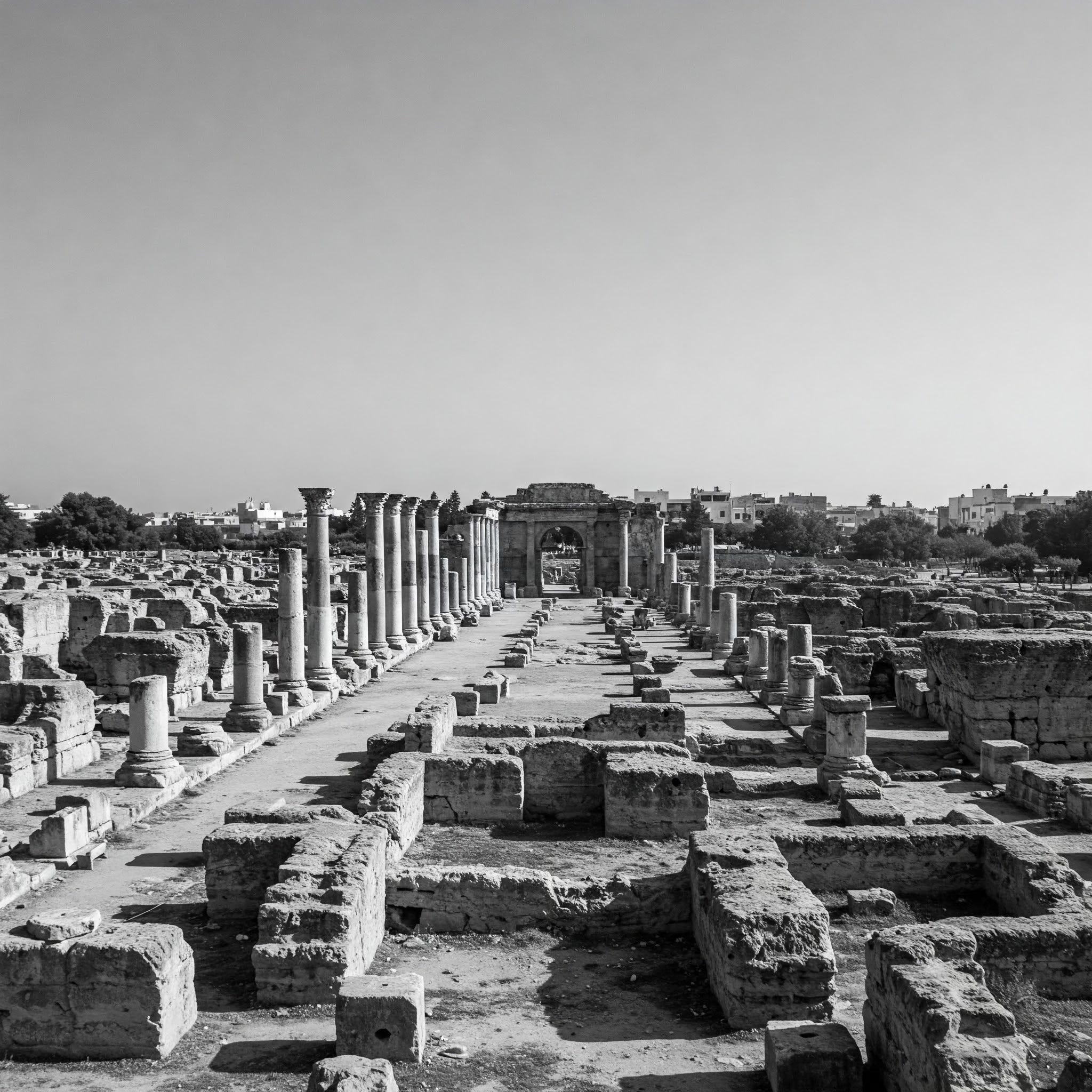
Few events in ancient history illustrate the ruthless determination of Rome quite like the siege and destruction of Carthage in 146 BCE. The Third Punic War (149–146 BCE) was the final chapter in the century-long struggle between Rome and Carthage, and it ended with a dramatic, merciless conclusion: Carthage was razed to the ground, its people massacred or enslaved, and its name erased from the map. Today, there is little that exists of the once thriving Carthaginian people, which is exactly what Rome intended to do.
The Siege Begins: Rome’s Unyielding Offensive
By 149 BCE, the once great Carthage had lost its status as a Mediterranean power. Despite Hannibal’s best efforts in the Second Punic War, Rome prevailed and forced Carthaginians into submission. Yet, despite its weakened state, Carthage remained a prosperous city - much to the chagrin of Rome.
Restricted by an overbearing peace treaty, ironically not that dissimilar from the Allies approach with Germany after World War I, Carthage’s military was restricted. When former allies to the north invaded and captured fertile Carthaginian farmlands, Carthage had little to defend itself with. They opted to launch a weak counterattack to take back their lands. The effort failed, but more importantly, it violated their treaty with Rome. Rome seized the opportunity to wage war once more—this time with the clear goal of destroying the city entirely.
In 149 BCE, a Roman force landed in North Africa under the command of Consul Manius Manilius. However, Carthage may not have had a robust military, but they had dense fortifications. The city was heavily fortified with triple walls, and its citizens, despite lacking a professional army, put up a ferocious resistance. Carthaginians, realizing that no diplomatic solution remained, turned their entire population into a war machine. Slaves were freed to fight, and civilians worked day and night forging weapons. Women sacrificed their hair to make bowstrings, and every available resource was dedicated to survival.
Scipio Aemilianus Takes Command
Rome initially struggled to breach Carthage’s formidable defenses, suffering setback after setback. However, in 147 BCE, the Roman Senate entrusted command to Scipio Aemilianus, the adopted grandson of the famed Scipio Africanus. Aemilianus immediately restructured the Roman siege efforts, tightening the noose around Carthage. He blockaded the city by land and sea, cutting off all supplies and ensuring starvation would do what direct assaults could not.
Despite their dire situation, the Carthaginians fought desperately. They launched surprise raids, constructed new ships in secret, and attempted to break the blockade. Their resistance delayed the inevitable but could not change the outcome. As famine took hold, the Carthaginians grew weaker, their ranks thinned by hunger and disease.
The Final Assault and the City’s Death Throes
In the spring of 146 BCE, after three years of siege, Rome launched its final assault. Scipio’s forces broke through the city’s outer defenses, forcing the battle into the streets. What followed was a brutal, six-day slaughter. Roman soldiers fought Carthaginian warriors, militia, and desperate civilians alike, advancing house by house. By the sixth day, the surviving Carthaginians—men, women, and children—made their final stand in the Byrsa, the city's religious and political center.
Thousands of civilians took refuge in the Temple of Eshmoun, a sacred Carthaginian site. When it became clear that the Romans would show no mercy, many set fire to the temple, choosing death over enslavement. The city, once one of the great trading hubs of the Mediterranean, was reduced to smoldering ruins.
Rome’s Merciless Endgame
With the battle over, the Romans enacted a systematic destruction of Carthage. The surviving 50,000 inhabitants were sold into slavery and distributed throughout the Roman Empire. Scipio Aemilianus ordered the city burned, and for ten days, the flames consumed what remained. Ancient sources, including Polybius and Appian, claim that Rome went as far as sowing salt into the soil to ensure that nothing would grow there again—though this is likely a later embellishment rather than historical fact.
With Carthage utterly destroyed, Rome annexed its lands, creating the province of Africa. The fall of Carthage removed the last significant obstacle to Roman dominance in the western Mediterranean, marking the beginning of an era in which Rome would reign unchallenged for centuries.
A Legacy of Total War
The destruction of Carthage set a precedent for Rome’s approach to dealing with enemies who resisted too long. It was a message to the world: defy Rome at your peril. The event also signified a shift in Roman warfare—from a state that once sought to conquer and integrate, to one that was willing to obliterate those it deemed irredeemable threats. Ironically, it is said that as Scipio Aemilianus watched Carthage burn, he quoted a passage from Homer that indicated he feared that one day a similar fate would befall Rome.
History for the Hurried:
February 13, 1945: During World War II in Europe, British and American planes began massive bombing raids on Dresden, Germany. A four-day firestorm erupted that was visible for 200 miles and engulfed the historic old city, killing an estimated 135,000 German civilians.
February 15, 1933: An assassination attempt on newly elected U.S. President Franklin D. Roosevelt occurred in Miami, Florida. A spectator deflected the gunman's aim. As a result, Chicago Mayor Anton Cermak was shot and killed instead. The gunman, an Italian immigrant, was captured and later sentenced to death.